Home › Industrial Floors and Specialty Slabs
Superior Concrete Greensboro installs industrial concrete floors and specialty slabs for manufacturing, storage, and processing facilities in Greensboro, NC. We design high load, superflat, and temperature controlled slabs to match your operations. Our crew coordinates reinforcement, joints, and finishes to minimize defects. Support your equipment and workflow with robust industrial concrete flooring.
Superior Concrete Greensboro provides professional industrial concrete floor throughout Greensboro, NC, North Carolina and the surrounding area. Our licensed, insured crew delivers safe, clean, on-time work with a free estimate before anything begins. Call (336) 814-8750 or request your free quote.
Industrial Concrete Floors Built for Greensboro Operations
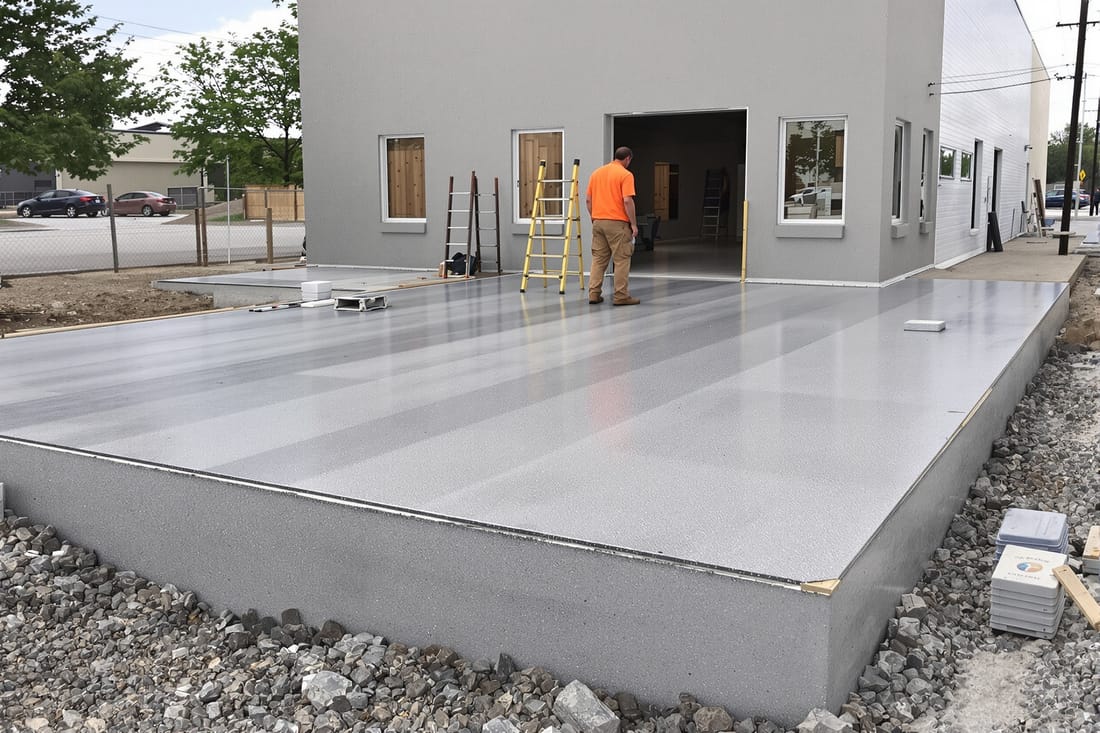
Industrial concrete floors in Greensboro are asked to handle more than just foot traffic. Forklifts, pallet jacks, chemical spills, and wide temperature swings between summer humidity and winter cold all put stress on the slab. At Superior Concrete Greensboro, we design every industrial concrete floor around how your facility actually runs, not just what looks good on paper.
The process starts with a site visit. We look at your soil conditions, how water drains around the building, your existing slab (if any), and the type of loads you expect. A warehouse that stores pallets three levels high needs a different slab than a light manufacturing shop with fixed machinery. We ask about your future plans too, so we do not pour a floor that limits you in two or three years.
From there, we work with you to select the right slab thickness, reinforcement type, and surface treatments. For example, a distribution center near the Greensboro Urban Loop may need a 6 to 8 inch slab with doweled joints and heavy rebar or fiber reinforcement, while a smaller workshop in an older industrial area may be fine with a thinner, jointed slab with moderate reinforcement. Our goal is a floor that carries your loads safely and stays serviceable for decades.
How We Engineer Industrial Floors and Specialty Slabs
A durable industrial concrete floor in North Carolina starts below the concrete. We begin by evaluating the subgrade. Soft spots are excavated and replaced with compacted aggregate, often a graded stone base compacted in layers, to reduce settlement and cracking. In areas with poor drainage, we may recommend underdrains or a thicker stone base to keep moisture from pumping up through the slab during heavy rains.
Next, we design the reinforcement system. Options include conventional rebar mats, welded wire mesh, or steel and synthetic fibers mixed directly into the concrete. For heavy rack systems and high forklift traffic, we may combine rebar around column lines with steel fiber reinforcement throughout the slab to control cracking between joints.
We also specify the joint layout before any concrete is poured. Saw-cut control joints are planned so they fall under racking lines or along logical traffic paths, which helps hide inevitable shrinkage cracks and reduces trip hazards. For specialty slabs that need fewer joints, such as high-bay warehouses using wire-guided forklifts, we can design larger joint spacing with higher reinforcement ratios and tighter flatness tolerances.
Finally, we consider the mix design and curing method. In Greensboro’s variable climate, we adjust water-cement ratios, admixtures, and set times so we can properly finish and cure the slab even in hot, humid summers or colder shoulder seasons.
Specialty Slabs for Heavy Loads, Precision Work, and Unique Uses
Not every industrial floor is a standard warehouse slab. Superior Concrete Greensboro frequently installs specialty slabs tailored to unique operations around the Triad.
For heavy equipment foundations, such as CNC machines or presses, we design isolated thickened slabs with increased reinforcement, vibration control, and precise anchor bolt placement. These slabs often require embedded conduits for power and data, as well as local thickening under machine feet.
Cold storage and freezer facilities need slabs designed to handle temperature differentials and potential condensation. In some cases, we recommend vapor barriers and insulation beneath the slab, along with mix designs that resist thermal cracking.
Food and beverage facilities may need specialty slabs that accommodate trench drains, floor slopes for washdown, and coatings that meet sanitation requirements. We plan these details before pour day so drains, slopes, and curbs are cast into the slab rather than added awkwardly later.
We also install high flatness and high levelness slabs for racked warehouses using very narrow aisle forklifts. These projects demand tighter tolerances on both strike-off and finishing, along with stricter quality control on joint spacing and curling control.
Surface Finishes, Hardeners, and Coatings for Industrial Concrete Floors
The surface of your industrial concrete floor is where daily use is felt. In Greensboro facilities, we commonly provide several finish options depending on your maintenance expectations and traffic patterns.
A hard trowel finish is standard for many warehouses and production areas. For environments that see frequent impacts, dragging pallets, or metal-wheeled carts, we may recommend a dry shake hardener broadcast onto the surface during finishing. This creates a denser, more abrasion-resistant top layer.
Where slip resistance is a priority, such as loading docks that get wet in summer storms, we can apply a broom or lightly textured finish in those zones while keeping the interior smooth for forklifts. Chemical and stain resistance can be improved with penetrating sealers, epoxy coatings, or urethane systems. For example, a facility handling oils and solvents might benefit from a multi-coat epoxy system, while a light manufacturing shop might only need a clear sealer to control dusting.
We also install embedded armor edges and joint fillers to protect floor joints from spalling under forklift traffic. Polyurea or semi-rigid epoxy joint fillers are common in industrial floors, since they support joint edges and reduce the shock that causes concrete to chip away over time.
Local Factors That Affect Cost, Timing, and Performance
Several local realities in Greensboro influence both the price and schedule of an industrial concrete floor project. Moisture levels in the subgrade are a major factor. Our clay-heavy soils can hold water, especially after prolonged rain. When the soil is wet, we may need extra time for drying or additional stone base to create a stable, dry platform. This can add to the cost but protects your slab from future settlement and moisture-related issues.
Weather also shapes the schedule. In hot, humid summers, concrete can set quickly on open sites, which means we plan pours early in the morning, use set-control admixtures, and ensure we have enough crew on hand for fast, consistent finishing. In colder months, we may recommend heated enclosures or curing blankets for some specialty slabs to maintain proper curing temperatures and avoid surface scaling.
Load requirements drive cost more than almost anything else. Thicker slabs, higher reinforcement ratios, and specialized finishes cost more upfront but are often cheaper than repairing or replacing a failed floor. During planning, Superior Concrete Greensboro is transparent about where spending more now will save you expensive downtime later.
Other cost drivers include access to the site, need for removal of an existing slab, drainage improvements, and any specialty requirements like embedded rails, pits, or chilled storage. We provide detailed estimates that break out these factors so you know exactly what you are paying for.
What to Expect When You Work With Superior Concrete Greensboro
A successful industrial concrete floor project depends on planning as much as on the pour day itself. When you contact Superior Concrete Greensboro, we start with an on-site walk-through and a conversation about your operations. We want to understand how you use forklifts, how racking will be laid out, what chemicals are stored, and where expansion or new equipment might go in the future.
We then prepare a project plan that includes slab design recommendations, surface options, anticipated joint layout, and a realistic schedule that fits with your production needs. For active facilities, we can phase the work so parts of your operation remain open while we pour and cure new areas.
Before placement, we confirm subgrade preparation, reinforcement installation, and layout of any embedded items such as anchor bolts or conduits. During the pour, our crew focuses on consistent placement, vibration, and finishing, followed by proper curing using methods like curing compounds, wet curing, or coverings depending on the slab type. After curing, we perform joint cutting, joint filling if specified, and final inspections.
You will have a clear single point of contact throughout the project for questions and updates. Our aim is to leave you with an industrial concrete floor or specialty slab that you do not have to think about every day, because it simply performs the way you need it to for years to come.